- TOP >
- FEATURE ARTICLES >
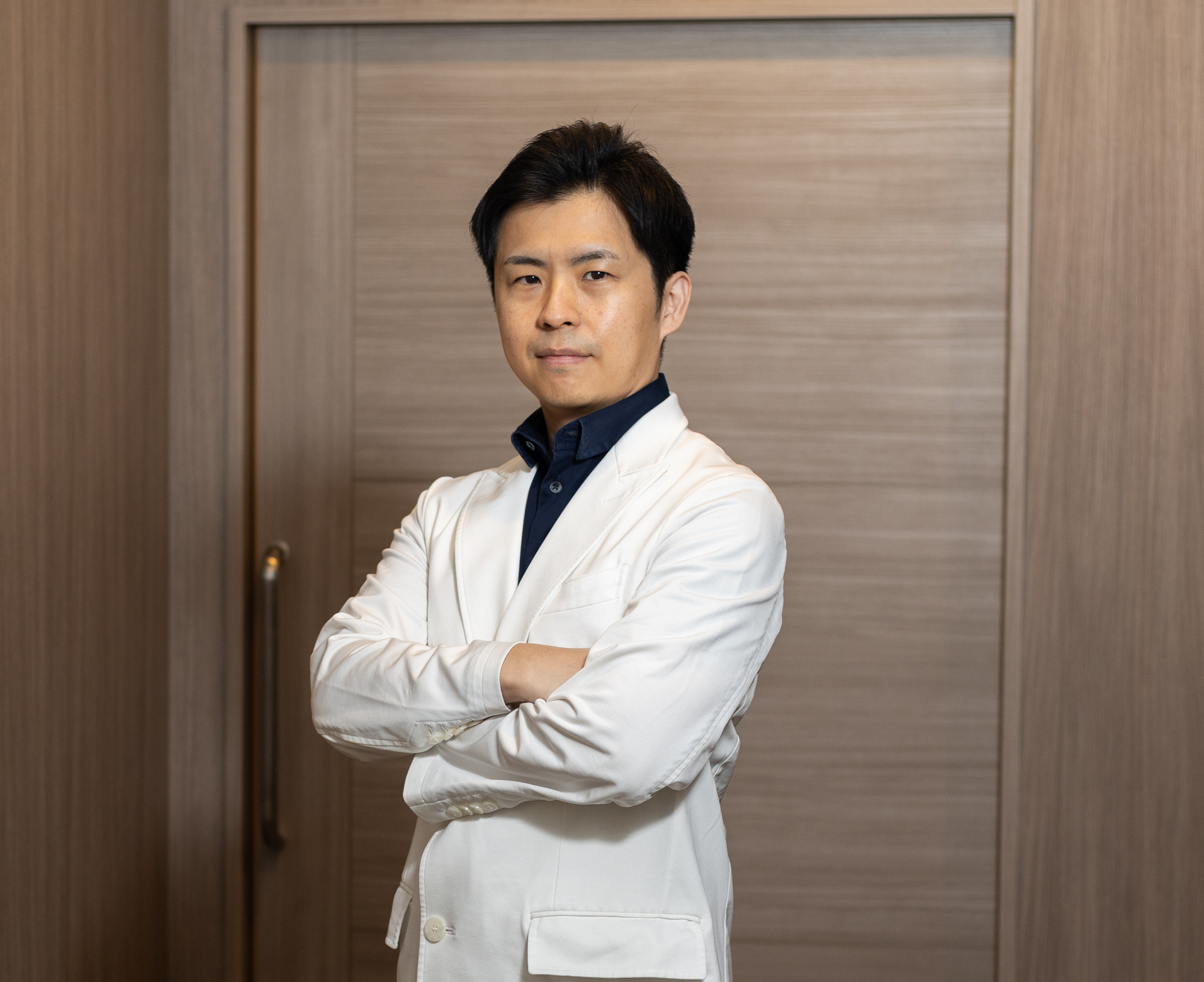
- Yasunori Kitayama
“Do ordinary things thoroughly.”
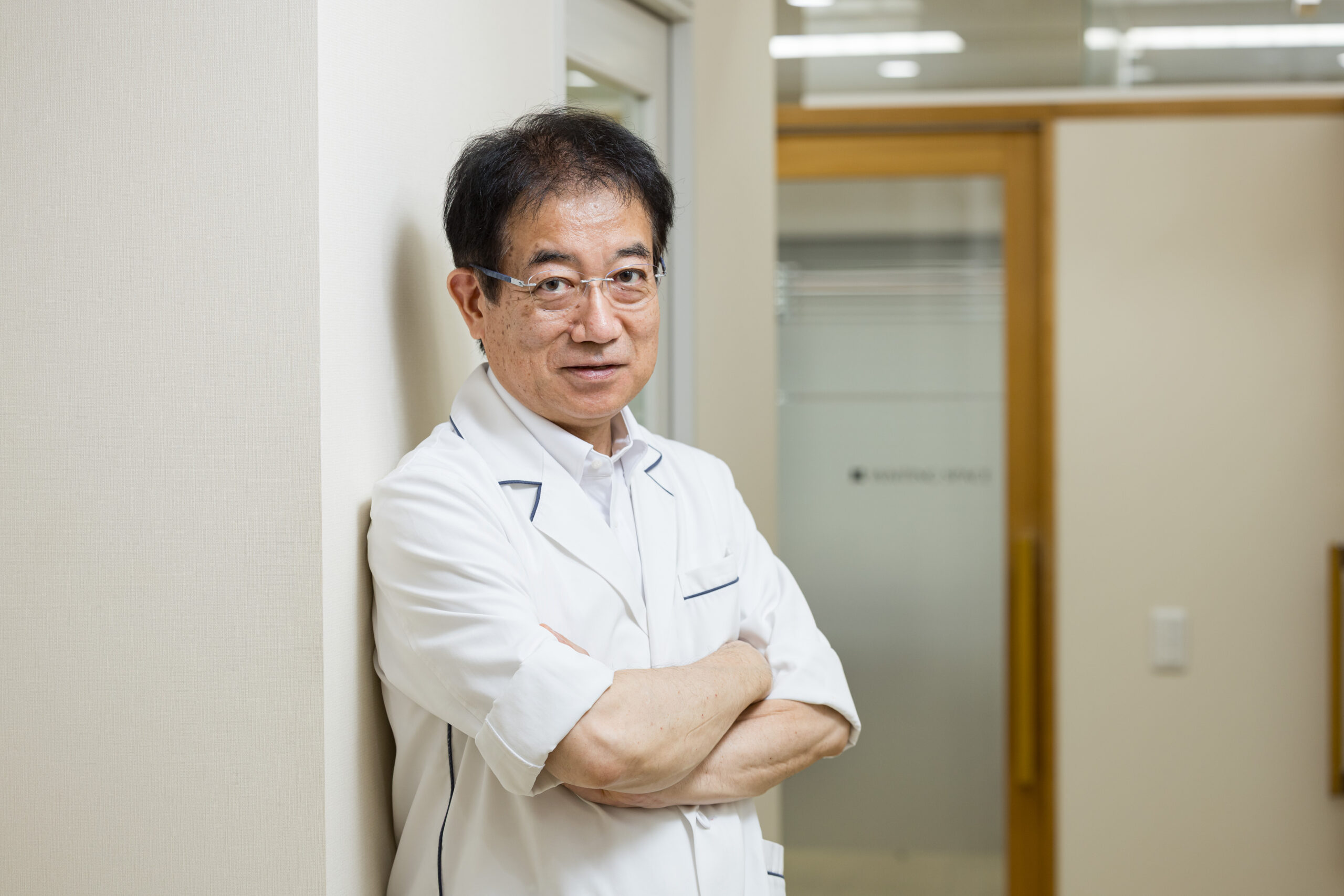
Yasunori Kitayama
Director
Kitayama Dental Clinic, Koso-kai Medical Corporation
Website:https://www.kitayama-dental.com/
Dentist sought out by patients from across the country for implant and “chewable denture” solutions. Continues to challenge conventional denture wisdom in pursuit of life-changing dentures.
- TOP >
- FEATURE ARTICLES >
- Yasunori Kitayama
Overturning conventional wisdom gives patients a real choice
From my earliest days as a dentist, I often visited Sweden, where research into modern implants was advancing. Surgery was difficult back then and came with plenty of complications, but learning the fundamentals well is what let me build my skills in the years that followed.
This might not be common knowledge, but dentists tend to lean one way or the other, toward dentures or toward implants. A dentist skilled in implants is usually not as skilled in dentures, and vice versa. Dentists who take time to master both are rare, in Japan and worldwide. But dentures and implants each have their advantages, so being able to use them selectively, according to the patient’s wishes and the condition of their mouth, ought to be the best approach of all.
Ours is one of the few dental practices with real skill, and a strong track record, in both methods. Weighing safety and reliability, I choose the best procedure for each case. A combination is possible too, such as dentures for the upper jaw and implants for the lower. Easing the burden on the patient and getting them to a state where they can chew comfortably and dependably, as soon as possible: that is the focus of my care.
Turning a patient's wishes into results
Most patients who come to a dental office do not have a clear picture of what is happening inside their own mouths. So I begin by helping the patient understand their current condition, what the trouble is, and how treatment will change it. From there, I aim to propose treatment that looks ten or twenty years ahead.
What I actually recommend varies widely, and it shifts with the patient's wishes as well. If someone has already lost many teeth, for instance, the usual recommendation would be implants. Some patients, mindful of the surgery and the cost, prefer dentures. Others want dentures themselves when implants would suit them better. If a dentist can only offer one type of treatment, the recommendations will tilt that one way too. What matters is drawing out the patient's wishes as fully as possible, choosing the method that fits them, and carrying it through to a result.
In that sense, our ability to handle everything from insured treatment to out-of-pocket prosthetics and implants is a real strength, and the wide range of options is a major benefit for patients. Chief among them may be the Kawarada Denture, developed by Dr. Kozo Kawarada, which offers function and stability entirely unlike an insured denture.
Making dentures that let you chew firmly
When I was a new dentist, I saw clearly that, in the world of insurance-based practices, many patients were simply not wearing their dentures. With partial dentures for people who had lost the back teeth on just one side, you were lucky if one in four wore them. They could still chew on the other side, so at the slightest discomfort they would take the denture out and never use it again. You would work hard to make it, and it would go unused. That frustration was my starting point.
What patients want from a denture, above all else, is to chew firmly, without pain or discomfort, without pain or discomfort. But delivering that reliably in a denture is, in truth, not easy. Dentures covered by insurance are no exception, and even costly out-of-pocket dentures do not necessarily turn out well.
Very few dentists can make a denture that satisfies the patient. As a result, implant treatment gets pushed too readily, and many patients who were left dissatisfied come to us.
Our Kawarada Denture is different. Beyond taking the first impressions and drawing up the design, we spend a great deal of time on adjustments once the temporary teeth are made. That is what produces the natural fit and the dependability that lets you bite into an apple or a baguette.
Even so, making this remarkable denture demands real skill from the dentist. It took me four years to bring my very first case up to a level I was satisfied with. After that, I saw one patient in need after another and, in about five years, I had handled roughly two hundred cases. Dr. Kawarada, who taught me directly, gave me high marks, but the truth is that the more experience I gained, the more I could see where my own fundamentals fell short. I still feel I have a long way to go.
The patient is the teacher
The mouth is extremely sensitive. Patients feel even the slightest unevenness in a crown or denture and know immediately when something is off. More than nine times out of ten, I believe, these complaints are correct. The question is whether we have the skill to resolve them. This is true for dentures, and for tooth pain and discomfort as well.
Someone once said to me, “Dentists get toothaches too, don’t they? A patient can only ever be a patient, but a dentist can be both doctor and patient.” Ever since, I have treated patients as though they were my teachers.
There was a time when I kept up a treatment I thought was sound, could not get the result I wanted, and was scolded by the patient for it. But facing those harsh words, and refusing to give up until I got it right, is what made me better. Building skill and gaining experience cannot happen overnight. Watching each case closely and listening as you go, growing one step at a time, is probably the surest path to success.
Taking in more patients, and passing skills to the next generation
As for where I want to go from here, I want to pass the skills and knowledge I have gained to more dentists. It calls for long, continued training in the dentist's own technique and in working closely with dental technicians. Even if the numbers are small, as long as the craft keeps being handed down, it will spread.
Happily, my daughter has now become a dentist and is training hard, carrying on what I have learned. There is a story from when she was still in high school. She read a book I had written for patients and wrote me her thoughts on it in English. The title she gave it was “Conventional wisdom can be changed by a single person.” In dentistry, it was long taken as gospel that you must never bite with the front teeth of a denture. There was a time when even university professors taught this. But I found the Kawarada Denture and learned that the conventional wisdom could be overturned. The line my daughter chose named exactly what I had been pursuing in this field. Looking back now, I feel a thread runs from that essay to the dentist she is today.
I had originally set my sights on the National Defense Academy, influenced by my father, who was a Self-Defense Force officer; I wanted to serve my country. I passed the dental faculty entrance exam on a whim and, at the urging of those around me, took this road.
I am now sixty-one. People have told me for as long as I can remember that I am a late bloomer, but even now I feel myself still growing. From here on, while continuing to care for my patients, I want to devote myself all the more to passing on what I have learned to the next generation.