- TOP >
- FEATURE ARTICLES >
- Asuka Ogai
”Greatness in the ordinary”
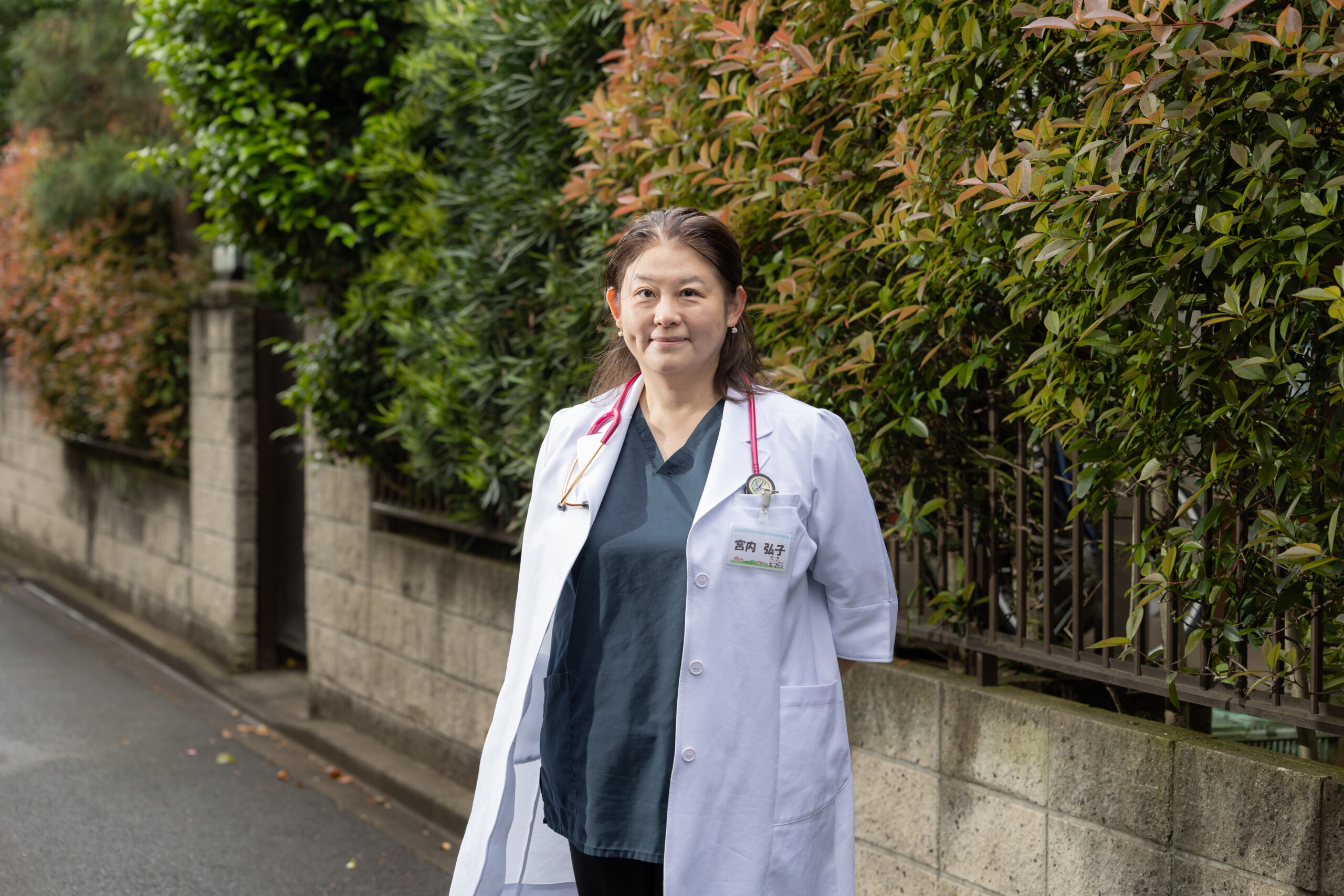
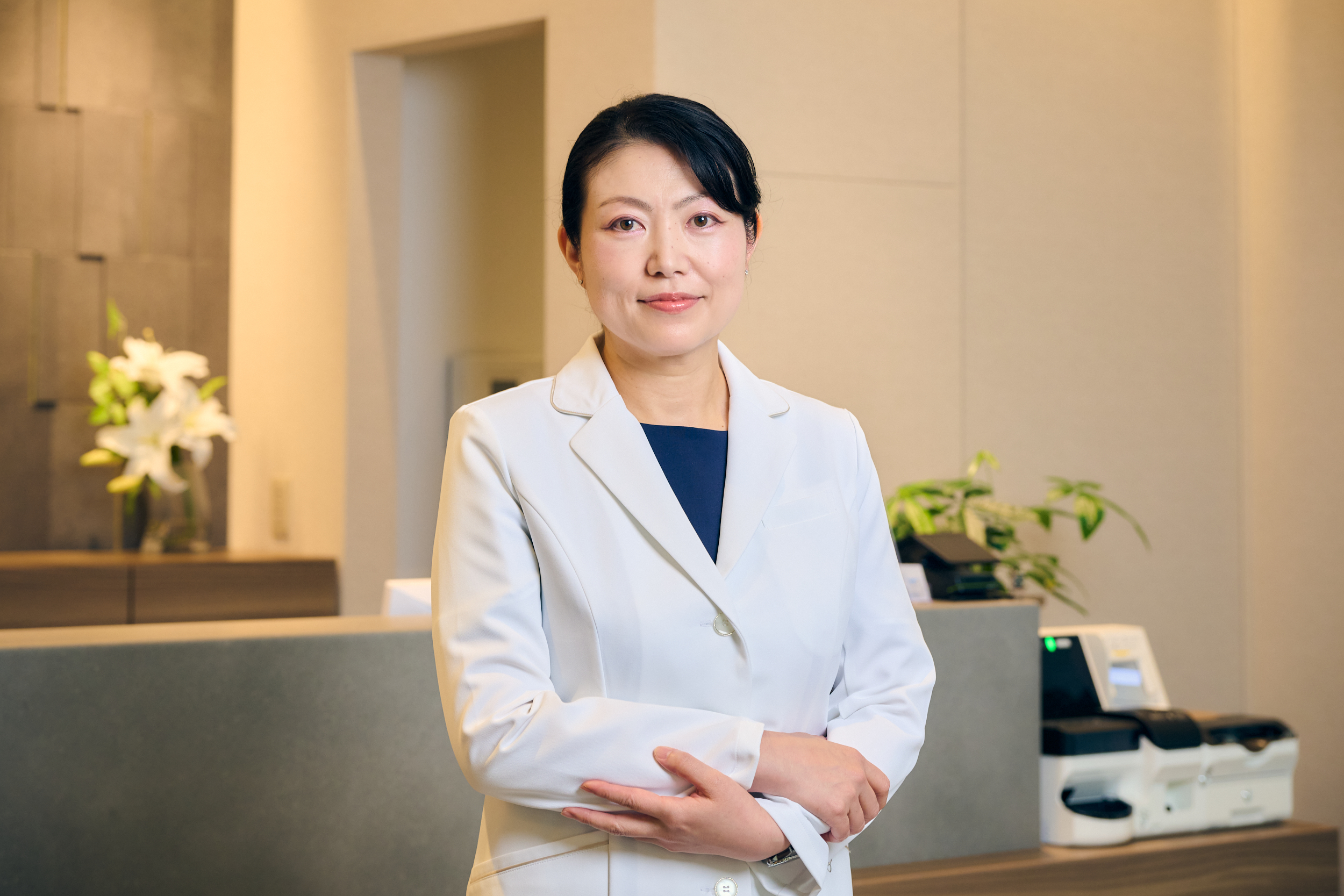
Asuka Ogai
Director
Ogai Internal Medicine Clinic
Website:https://ogaiclinic.jp/
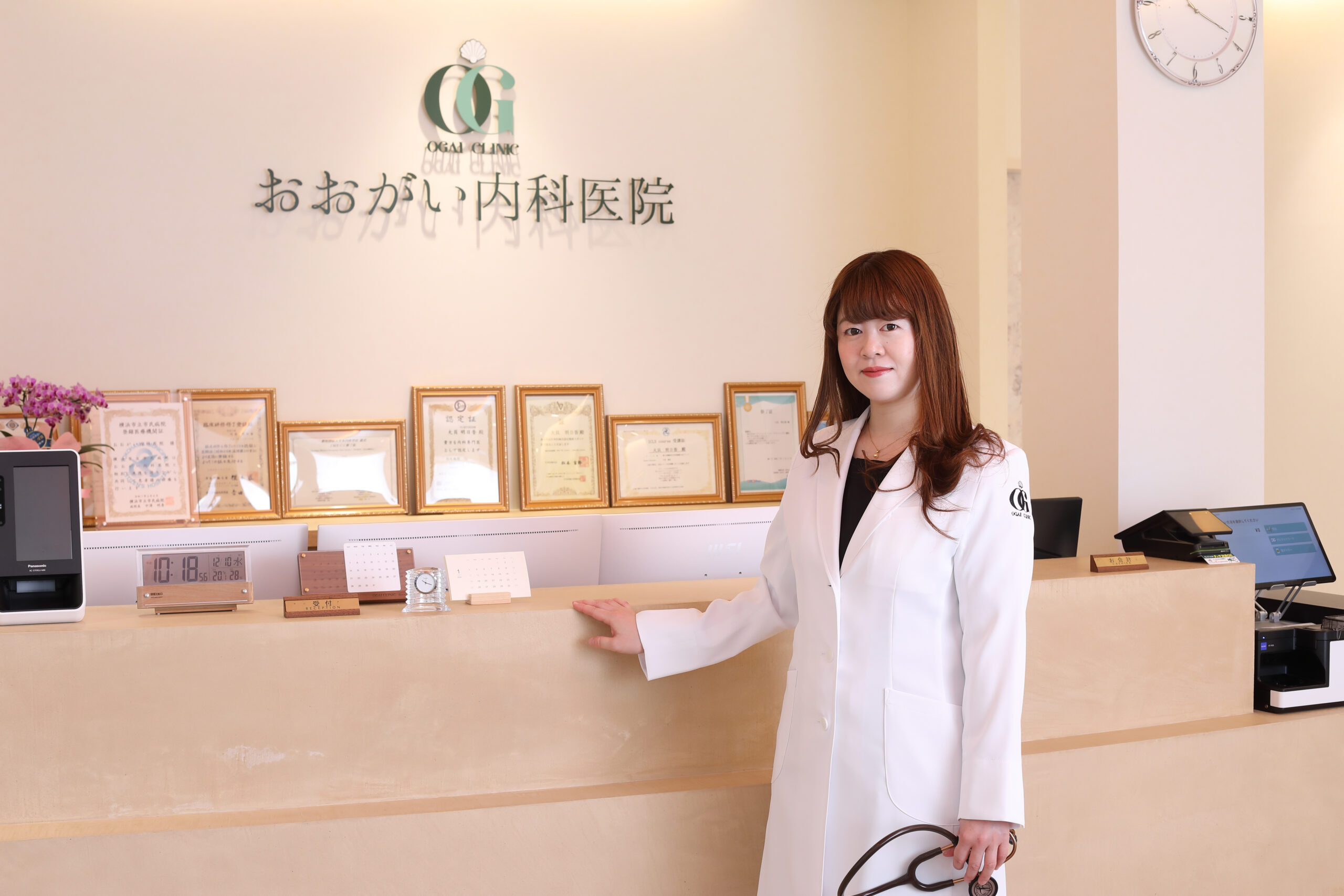
Internist who graduated with honors and received a Teaching Physician Award in her twenties before opening her own clinic. She bridges patients and medicine through both clinical expertise and empathy.
- TOP >
- FEATURE ARTICLES >
- Asuka Ogai
Learning how hard, and how important, it is to communicate
My father was diagnosed with cancer when I was in middle school. A tumor turned up in the bile duct at the entrance to the liver, and the primary site could never be identified. As the disease advanced, he weakened bit by bit, until the only thing he could consume was a liquid nutritional drink. His doctors considered bypass surgery to connect the esophagus to the intestine, and believing it might help, he went in for surgery. Once they actually opened him up, though, the adhesions were worse than anyone expected, and there was nothing to do but close him back up.
After the surgery, my father visibly declined. I can still picture him propping himself against the bed with one arm, reading through papers from my school with a trembling hand. Around the time my summer break began, he was moved to a private room for his final days. “Now that I’m in a private room, the toilet’s cold. Come winter, it’ll be the death of me,” he joked. I’ve never forgotten those words. He faded quietly after that and died soon after.
The doctors, nurses, and staff who cared for him were devoted, and I remember well how they eased even our family’s fear. Their explanations, though, were thick with technical terms, and there were things we simply couldn’t follow. If only we had understood what the treatment involved back then, might there have been another option? That question is what set me on the path toward becoming a doctor who could be a bridge for patients.
Preparing thoroughly for whatever I face
In everything, I put stock in preparing before I begin. An athlete stepping onto the field, a student sitting an important exam: neither can expect results by winging it. Only careful preparation lets you show what you're capable of. Something about that appealed to me, and at some point I began working backward from the future I wanted, figuring out what to do now and then doing it. This is a personal creed, and it carries straight into how I work as a doctor.
I also like to think things through logically. Even in medicine, which can look entirely logical, some things come down to memorization, like which drug to match with which symptom. That kind of rote work is something I'm poor at. I prefer reasoning that follows a thread: a defect in this gene leads to this disease, and this component of this drug acts on that symptom. I suppose I'm the sort who can't feel settled until I understand something from its foundations.
To explain illness to patients in a way they can grasp, I decided I needed a deeper understanding of the human body. So from my early years in medical school, on my own, I spent nights and days off in the lab, studying the genome, the body's map, until I could read how disease takes hold and how healing unfolds at the molecular level. To the people around me it may have looked like, what on earth is she doing? But all of it feeds my practice now. Understand something at its root, and you can break it down to fit the person in front of you and explain it accurately. That, to my mind, is one of a medical professional's real jobs.
Hematology, a field I stumbled into
Because I lost my father to a digestive disease, I meant to go into gastroenterology once I had my medical license. But a senior colleague at the time told me, "You should do hematology." It surprised and puzzled me at first. Looking back, I think he had seen my character clearly. Blood is a living system that circulates through the whole body, and understanding it demands reading events at the molecular level. In leukemia, cancer cells can multiply over the course of an hour or two. It's a field that fits my nature: understand a disease correctly at its root, and stay thoroughly prepared at all times. Helping patients understand their illness and treatment under real time pressure lined up with what I had wanted to do as well.
The pace on the ward nearly made my head spin at times. But I stacked up small successes in that setting, one after another, until I could treat patients with confidence.
Master the basics, and the rest follows
I love math, and when I was studying for my university entrance exams, my teachers often told me: “You don't need to solve the hardest problem sets. Drill the fundamentals, and soon you’ll be able to handle complex applications.” While the basics look easy, they’re the foundation of every advanced problem. Understand them thoroughly, and what seemed impossible before will become attainable.
The same idea runs through medicine. In fact, I sometimes catch a serious illness inside a patient's smallest complaint. I've found lymphoma in a patient who came in about constipation, and a spontaneous rupture of the esophagus in someone who appeared merely dehydrated. What matters is digging into the question of why a symptom is there at all and trying to reach its root. I make a point of taking in the whole picture.
Thinking about death means thinking about how to live
At our clinic we've set up an advance care planning (ACP) outpatient service. Within the finite span of a life, it's a place to consider how you want to live and how you want to die, and to work out what part medicine should play in that. Thinking about how you'll die connects to thinking about how you'll live. So I'm building a space where not only older patients but younger ones too can talk about both.
In practice, many people bristle at any mention of life extension or end-of-life care. Medicine is an uncomfortable topic for the general public, so their reluctance makes sense. To lower that hurdle even a little, I hold a health seminar once a month on the basics of medical thinking and how to face illness. I change the theme each time, so many people return, and it keeps me learning too. At the same time, I'm working toward a one-stop practice that spans general internal medicine, sports medicine, and end-of-life care, so the people of this community have real choices when it comes to living life on their own terms.
Doing what I can, one step at a time
Two contrasting experiences stand out in my career as a doctor. The first was being chosen for the G1 College, a program that picks people seen as future leaders. Many of those selected alongside me went on to work on the world stage, not only in medicine but in economics, government, education, and international affairs. The second was an award that usually goes to doctors in their fifties, after long careers in clinical work and teaching. I received it at twenty-nine. I take it as recognition not of years served but of an attitude, of working backward from a future goal and building up what needs doing now, and of how I approach the daily work of caring for patients and teaching.
It may read like a glamorous résumé, but I always feel I'm still in the middle of my journey. That's exactly why I want to keep meeting each patient in front of me honestly, without letting titles go to my head. When I was still a child, my father taught me to become someone who serves as a cornerstone for society. Those words remain with me, and they set the standard for my work as a doctor.
In a society where technology has advanced and information is easy to reach, I feel the family doctor matters more than ever: someone patients can consult for a sound reading of medical information, so they can understand their own bodies and live healthy, authentic lives.
I once felt the sting of medicine's impenetrability myself. Now, as a doctor in private practice, I want to close the literacy gap between patients and medical staff through clinic care that insists on clear explanation and works hand in hand with hospitals, and in doing so, help build a society where everyone can live on their own terms. That is my professional goal and my center of gravity. I intend to work carefully toward it, and to build up what I can achieve right now, one step at a time.