- TOP >
- FEATURE ARTICLES >
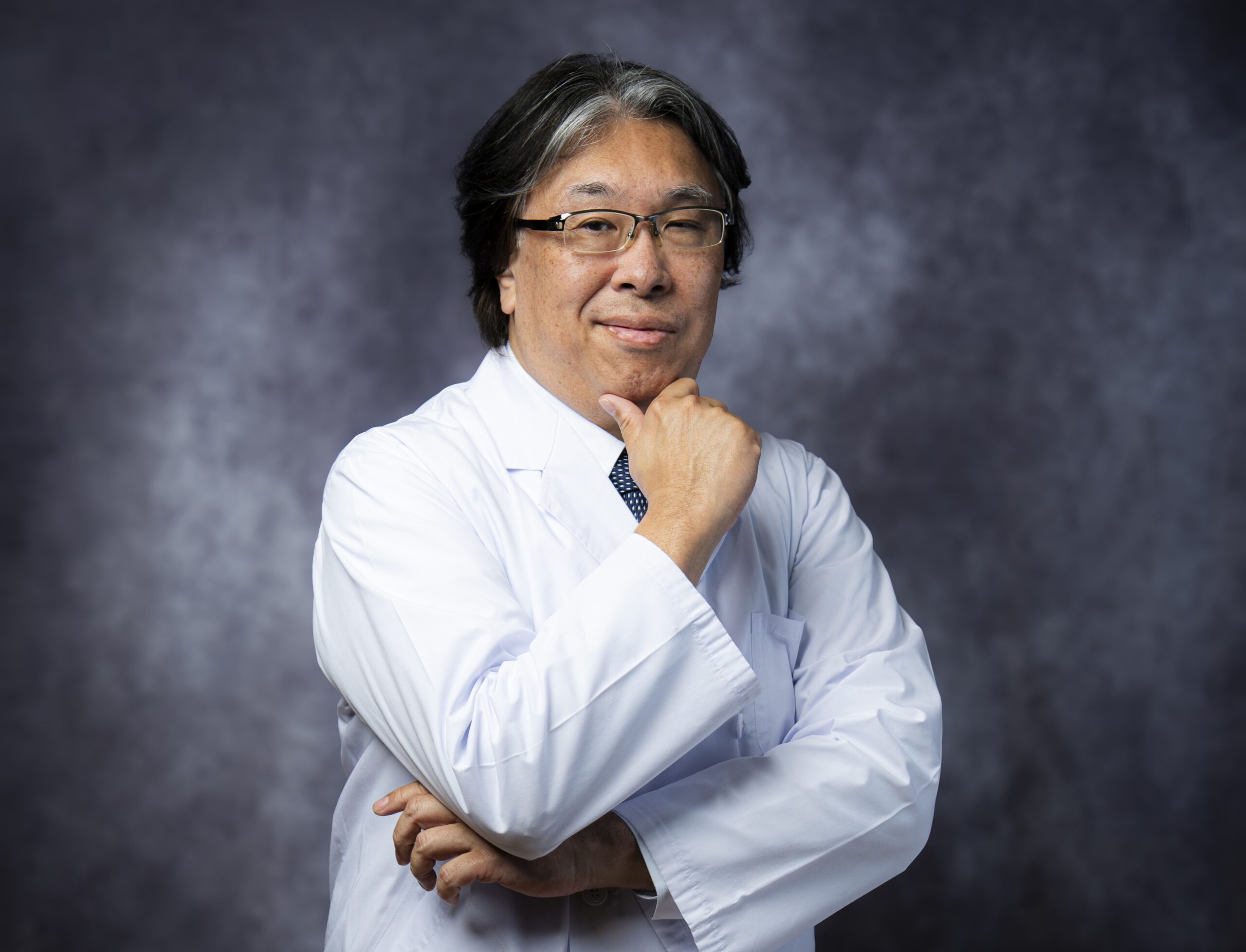
- Noriyuki Inaki
“Where there's a will, there's a way."
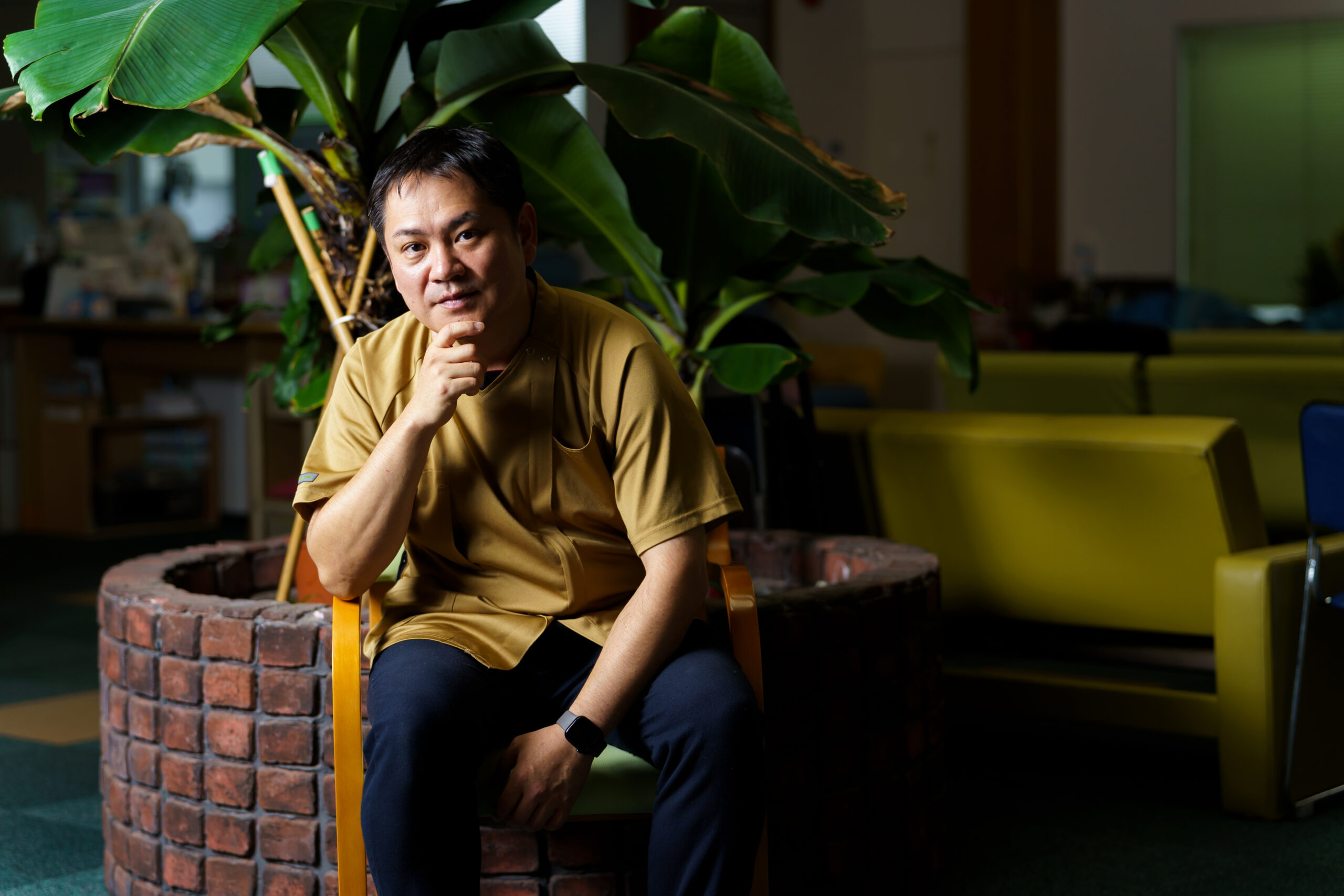
Noriyuki Inaki
Professor
Kanazawa University Hospital
https://web.hosp.kanazawa-u.ac.jp/
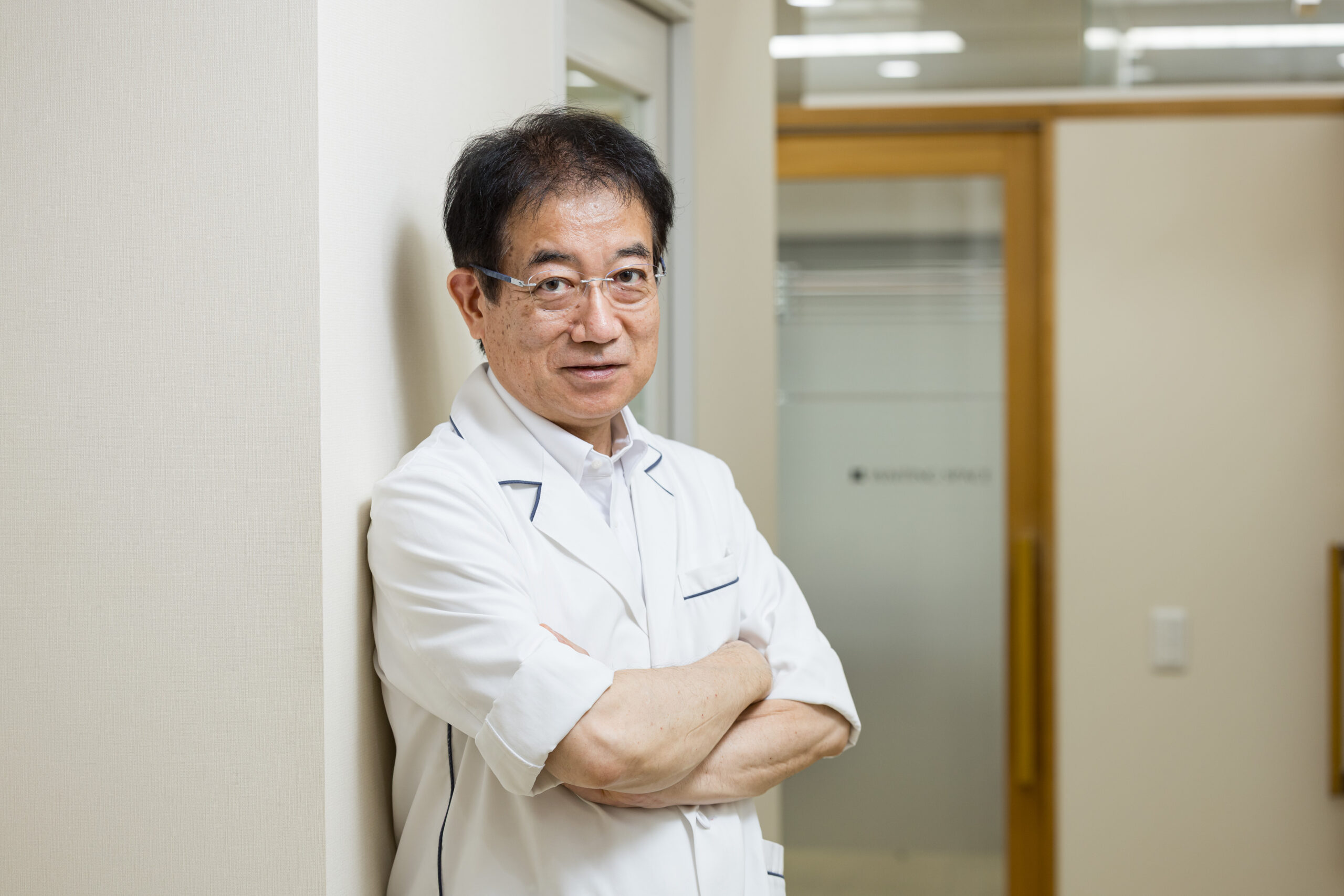
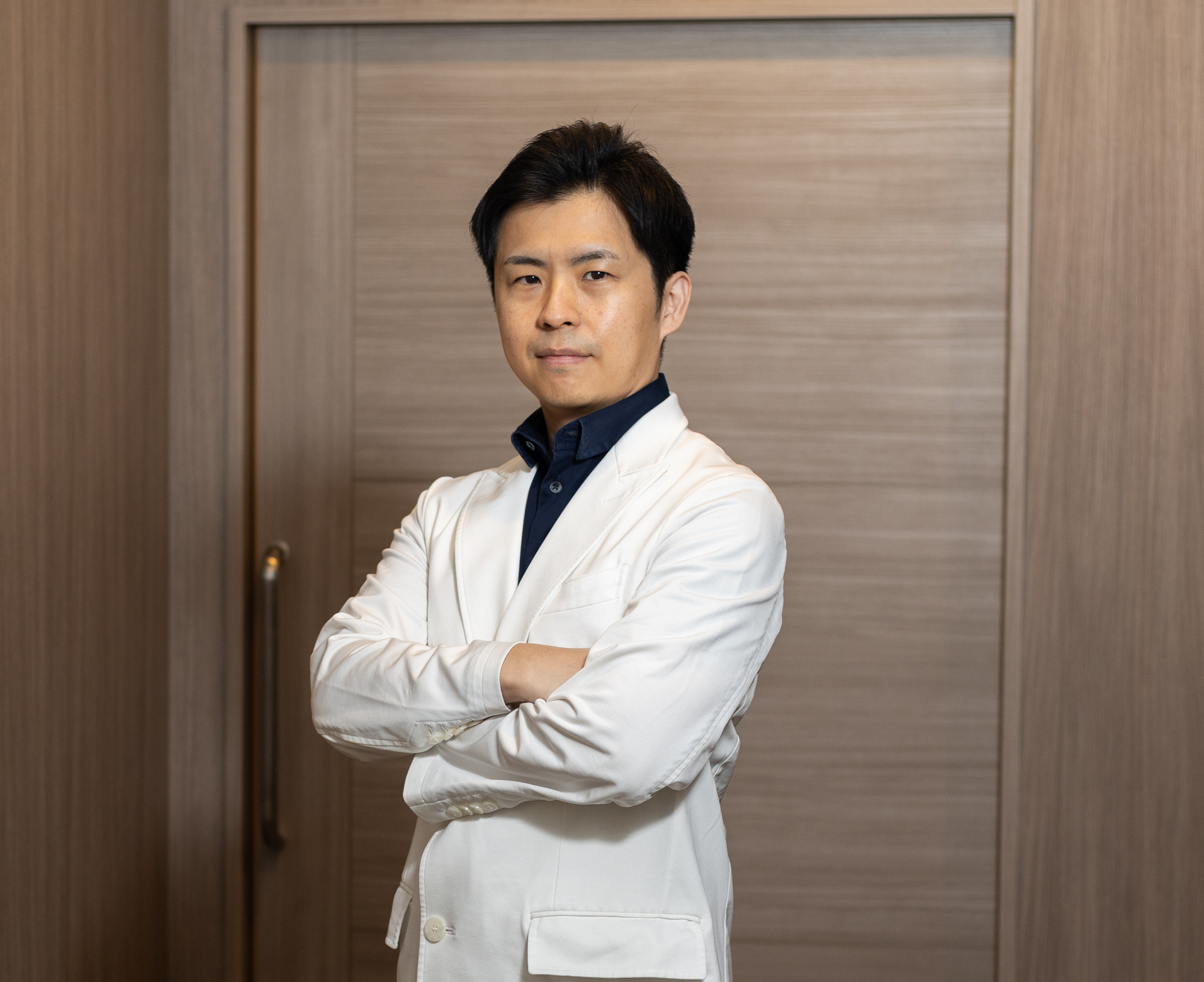
Gastrointestinal surgeon at the forefront of minimally invasive and robotic surgery. Committed to bringing advanced care to local communities, while training the next generation of physicians.
- TOP >
- FEATURE ARTICLES >
- Noriyuki Inaki
Inspired by an expert, I found my calling in minimally invasive surgery
I don’t come from a family of doctors, so there was never any question of following in my father’s footsteps. But around the time I moved from junior high to high school, there was an older student I admired. He was captain of the soccer team and a top student, accomplished in athletics and academics. He was aiming for medical school, and that motivated me to pursue it as well.
Getting into medical school takes real academic ability, so I threw myself at my studies. Once I was in and had worked through the general training, my clinical rotations began, and my first clinical rotation was in the First Department of Surgery, where Dr. Eiji Kanehira was performing endoscopic surgery.
In Japan, at the time, endoscopic surgery was still in its infancy. Dr. Kanehira was one of the country’s early pioneers, and he remains a world-class expert to this day. I would watch him work through a tiny opening in the patient’s abdomen, guiding the endoscope with real skill to carry out the operation. I thought: this is it. From that moment I was set on becoming a surgeon and mastering endoscopic, minimally invasive surgery.
Patient-first thinking runs through everything
Wanting to study minimally invasive surgery more deeply, I went to train at a hospital in Germany, the same place Dr. Kanehira had studied. For two years I immersed myself in the most advanced techniques in the field.
I’ve always had an interest in machinery, so after I returned home, I took on the development of new surgical methods and instruments, alongside my daily clinical work.
Medicine advances by the day. The progress in minimally invasive surgery around the year 2000 was especially striking. Endoscopes grew thinner, more flexible, and more capable, and surgical robots arrived in the operating room. As the instruments grew more sophisticated, so did surgeons' skills, which in turn drove the next round of improvements. Recently, Japanese-made surgical robots have appeared as well, and I see a great deal to be hopeful about in them. They are built to suit the physiques of Japanese surgeons and the realities of Japanese medicine, and their makers respond quickly to the needs of clinical practice.
Yet no matter how much a surgeon sharpens his technique, no matter how far the technology advances, I believe the foundation of care is always a patient-first attitude. Hold firmly to that attitude and gentler, minimally invasive surgery will improve, and with it the work of refining and developing the devices that make it possible. From there it leads naturally to teaching, to passing those skills on.
Tailoring care to each patient's individual circumstances
I have spent my career at the leading edge of minimally invasive surgery. At the same time, I understand very well how important community medicine is.
It was my third year as a doctor, after I had finished my training at the university hospital. Young doctors at that stage leave the university and are sent out, almost on assignment, to affiliated or regional hospitals. My first posting was a hospital in Yokohama. It was full of patients who needed difficult, high-level treatment, and there was an enormous amount of surgery. Good for honing a surgeon's skills, but my days were nothing but operations from morning to night.
The next year I moved to a hospital in Wajima, on the Noto Peninsula, and it was the opposite of Yokohama: mostly elderly patients. There was an operation only every three days or so, but for each patient I had to handle everything myself, the tests, the diagnosis, the surgery, and the follow-up afterward.
Those two contrasting years taught me a great deal. Every patient has their own living situation and their own ties to family. Weighing that background and offering a careful, considered treatment plan is what matters, and it is what a doctor is called to do.
Lowering the barriers to robotic surgery
Minimally invasive surgery will keep spreading, I expect. But the surgical robots regarded as the new frontier still face high barriers to wider use. For one thing, the machines are very expensive, and the running costs add up. Without a certain volume of cases, a hospital cannot sustain one. The range of conditions covered by insurance has grown compared with years past, but it is still limited, and hospitals face various requirements of their own, including requirements regarding case volume and staff expertise.
One of the strengths of robotic surgery, though, is that it makes remote assistance possible. A proof-of-concept trial linking Japan and France has already succeeded, so as long as we can secure stable communications infrastructure, there is real room for growth.
Picture a young doctor at a rural hospital performing an operation while a veteran assists from a distance. It would tie community medicine and surgical training into a single thread. Making that real depends on educating and developing doctors, and that is a role we university hospitals can take on. If we support young surgeons so they can operate with confidence, we can help remote surgery take hold in the years to come.
And if we could develop a simpler robot, something between today's high-end endoscopes and the full surgical systems, we could bring down the barriers to entry dramatically. That, too, is work that falls to those of us who develop these devices.
Dreaming big, giving everything to the patient in front of you
I belong to a generation that approached medicine with a strong sense of purpose and self-sacrifice. That was simply the norm in my day, but looking back now, I sometimes regret working so much because it meant not giving my wife and children enough attention. Partly out of that regret, I want the young people coming up to have full lives, in their work and outside it. I want to keep thinking about what it takes to make that possible.
As digital transformation reaches further into medicine, for instance, a surgeon's work should grow leaner and smarter. That would improve working conditions in surgery, help put the brakes on young doctors drifting away from the field, and add momentum to training more women surgeons. To bring about that kind of change across a whole region, the university hospitals that send doctors out, the local hospitals that receive them, and the municipal governments all need to move forward as one.
Beyond a five or ten-year horizon, I want to keep picturing the surgery and the systems that will protect human health fifty or a hundred years from now. At some point, for example, we may need to think about the medicine required for humanity to live on the moon.
Of course, some may dismiss such ideas as unrealistic. But dreaming of a bright future for medicine while facing the patient in front of you, easing their pain and their suffering, is far from meaningless.
Keep your mind on the distant future while giving everything to the problems right in front of you. By taking that stance, perhaps I can help young people feel what makes a surgeon's work compelling. Perhaps the people around me will come to understand it too. That, at least, is what I find myself thinking.