- TOP >
- FEATURE ARTICLES >
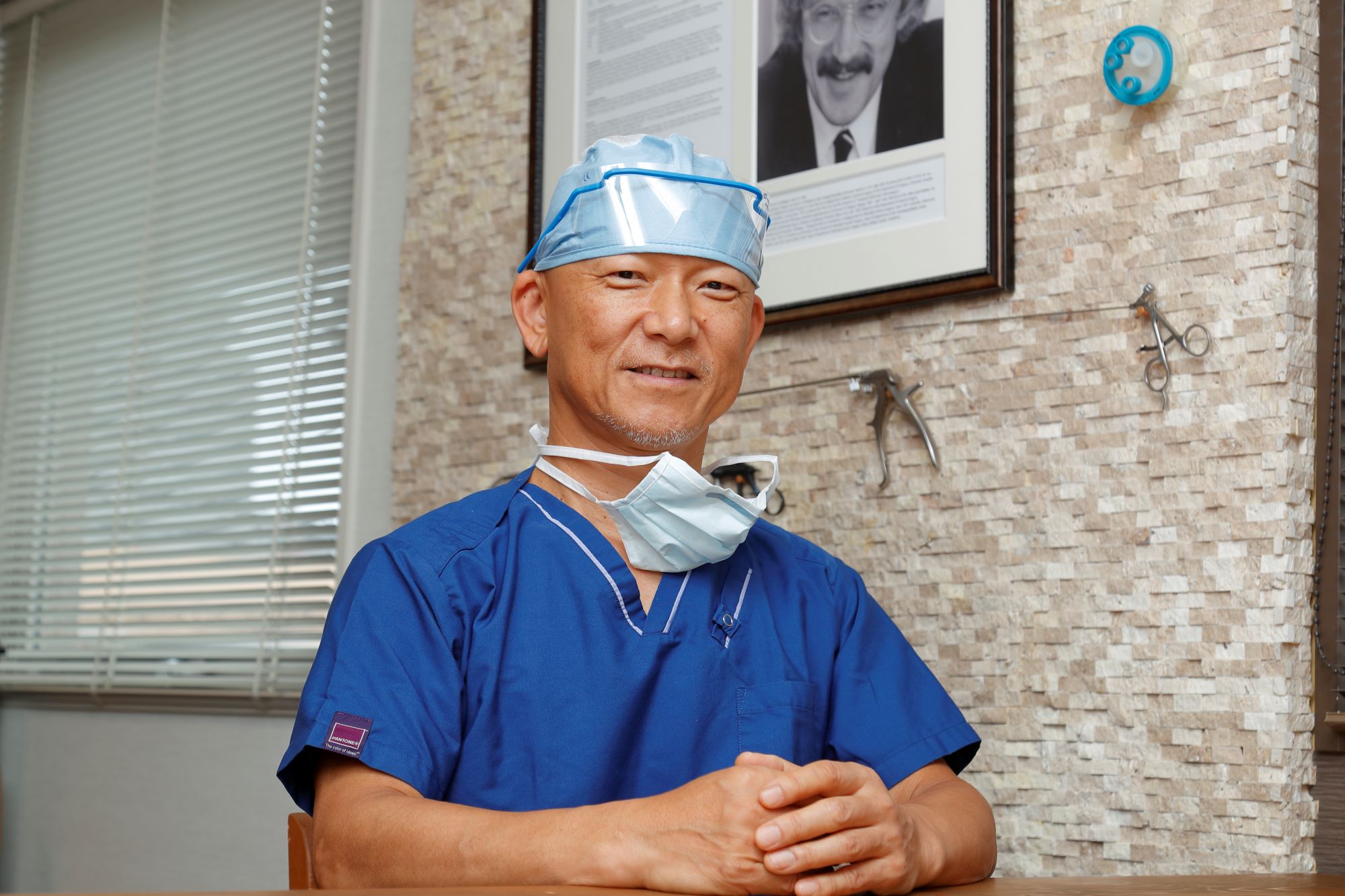
- Eiji Kanehira
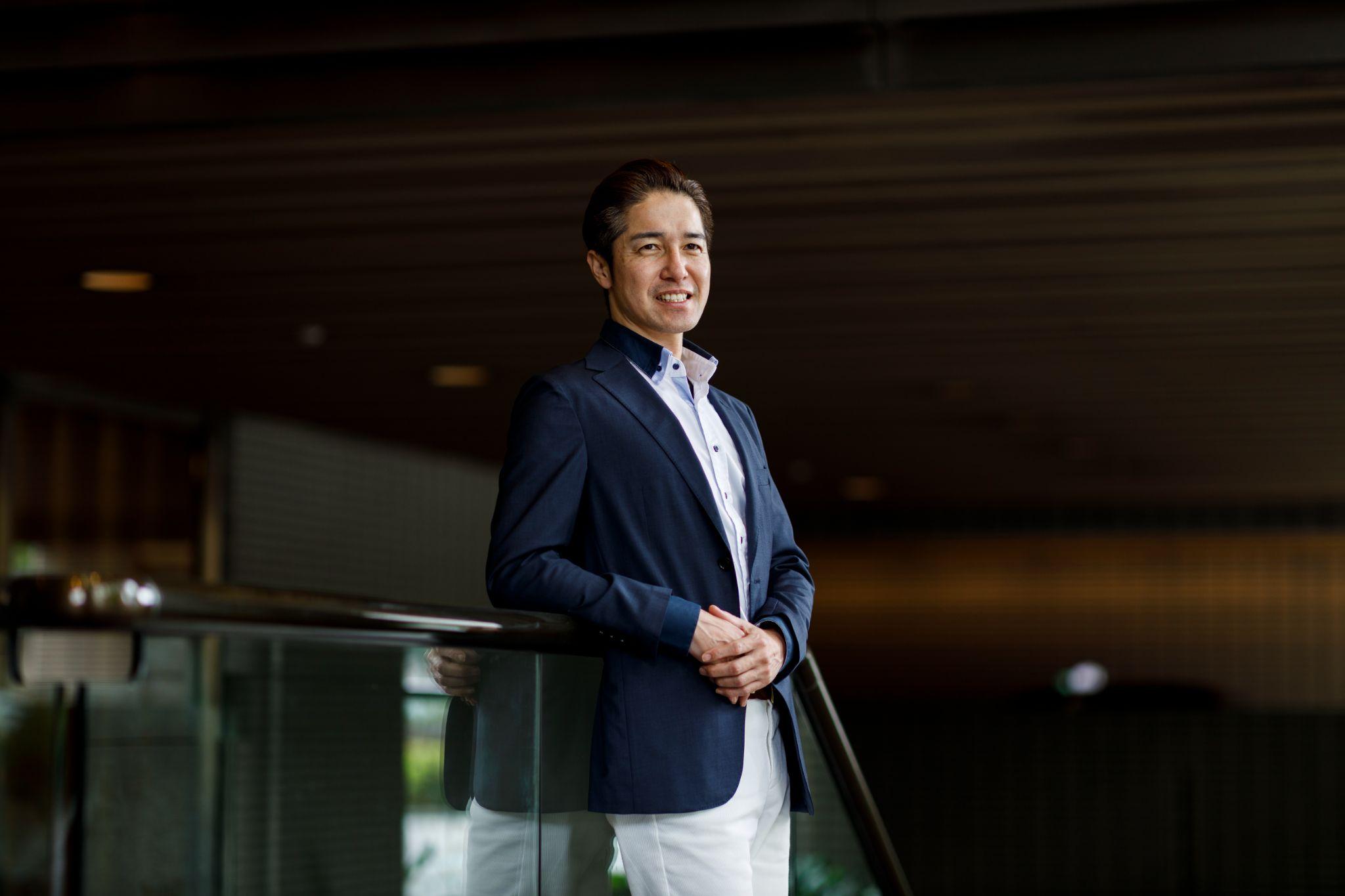
“Happiness is a choice”
Eiji Kanehira
Senior Consultant Surgeon, CEO
Medical Topia Soka Hospital
Website:https://www.mtopia.jp/
Chief Director of Endosurgery Laboratory Kanehira Editor-in-Chief of “Minimally Invasive Surgery & Allied Technologies”
- TOP >
- FEATURE ARTICLES >
- Eiji Kanehira
Medical Techniques That Minimize Patient Burden
Many of the patients who come to my clinic are understandably anxious. Some have been told at other hospitals that they need a total gastrectomy, and, overwhelmed by fear, spend sleepless nights searching online for the worst possible scenarios. Family members often tell me, “It’s like they’ve become a completely different person.” When someone receives a sudden diagnosis of serious illness, it’s only natural for them to lose emotional balance.
That’s why I believe mental and emotional care are as essential as surgical skill. The word “hospital,” after all, shares its root with “hospice.” Our role as medical professionals is to deeply understand a patient’s circumstances and stay by their side through recovery, offering treatment and healing along the way.
The Paradox of Japan’s Surgical Fee System
The current reimbursement system for medical procedures has long-standing flaws that threaten the future of surgical care. Take, for example, a patient who avoids a total gastrectomy thanks to a less invasive, organ-preserving procedure. That patient can return to work much sooner, contributing to greater productivity across society. A surgery that offers such benefits should be compensated accordingly.
Yet under the existing system, the reimbursement for a total gastrectomy is roughly 640,000 yen, while a stomach-preserving minimally invasive surgery earns only about 280,000 yen—just 44 percent of that amount. These organ-preserving operations demand far greater technical expertise and careful, experience-based reconstruction, yet they are undervalued. The disparity highlights a structural contradiction: hospitals, seeking financial sustainability, have incentives to perform more invasive operations, even when less invasive ones better serve patients’ physical and emotional well-being.
Because specialized procedures like organ-preserving surgeries are relatively rare, they often fail to meet the volume-based evaluation metrics used by the national system. As a result, they aren’t even classified as “special surgeries” for reimbursement purposes. Unless the system is fundamentally reformed to recognize and reward advanced skill, we risk accelerating the decline in the number of capable surgeons and, ultimately, diminishing the quality of medical care as a whole.
Unlocking the Potential of Medical Inbound Care
To provide high-value care sustainably, hospitals must also maintain stable management. About a decade ago, we began focusing on “medical inbound” services—treating foreign patients who pay out of pocket. This strengthens our hospital’s financial base and helps promote Japanese medical technology and service quality on the global stage.
We have welcomed many international patients over the years, and through that experience I’ve realized that Japan’s doctors and hospitals often underestimate their own strengths. Government support is certainly important, but it’s equally vital for individual institutions to identify what makes them exceptional and share that with the world.
Language and cultural differences can pose challenges, but advances in translation tools have dramatically lowered those barriers. While our staff were initially hesitant, they now use these tools as part of their daily routine. The key is to take that first step, learn through practice, and build confidence from experience.
Lessons from Spain and Japan’s Next Challenge
In September 2023, I attended an international conference on advanced medical technologies in Spain and was astonished by what I saw. Many countries are not only digitizing medical systems but also actively integrating AI into hospital management.
One presentation, by an architect, was particularly striking. His hospital design showed a facility operating with minimal staff, where AI handled complex tasks such as surgery scheduling and bed management. The result was greater efficiency and fewer human errors.
Such digital transformation in medicine—what we might call medical DX—will be essential for Japan as well, especially with looming workforce shortages. Yet public understanding of AI remains limited, and fears about job loss persist. To ensure smooth adoption, society must engage in open dialogue and education about the broader implications of technological change.
At our hospital, we’ve begun creating opportunities to learn from early adopters. We invite representatives from companies developing AI-based medical products, share case studies from other institutions, and discuss how we can realistically integrate these tools into our operations.
The Surgeon’s Mission and Facing the Future
According to a 2016 report by Japan’s Ministry of Health, Labour and Welfare, the balance between physician supply and demand was projected to even out around 2024–25, after which a surplus was expected. We have reached that turning point, but contrary to predictions, the number of skilled surgeons continues to decline. Excessive workloads, the risk of litigation, and insufficient legal protections are major deterrents for young doctors considering surgery as a career.
I take great pride in being a surgeon. It's a vocation unlike any other. To make an incision into a closed body, to see disease directly, and to remove it with one’s own hands—that is a privilege reserved only for surgeons. And with that privilege comes a profound sense of responsibility.
Surgery can be grueling and unpredictable. There are moments when I’ve caught myself thinking, I wish I could hand this case off to someone else. But whenever that thought arises, I remind myself, What if this patient were my father? Someone has to do it. That conviction is what steadies me. The resolve and responsibility that come with being a surgeon—that’s what keeps me going.